Working Hours : Mon - Sat 10:00 am to 7:00 pm
 08045478084
 Send Inquiry


 English
 Spanish
 French
 German
 Italian
 Chinese (Simplified)
 Japanese
 Korean
 Arabic
 Portuguese

 Send Inquiry
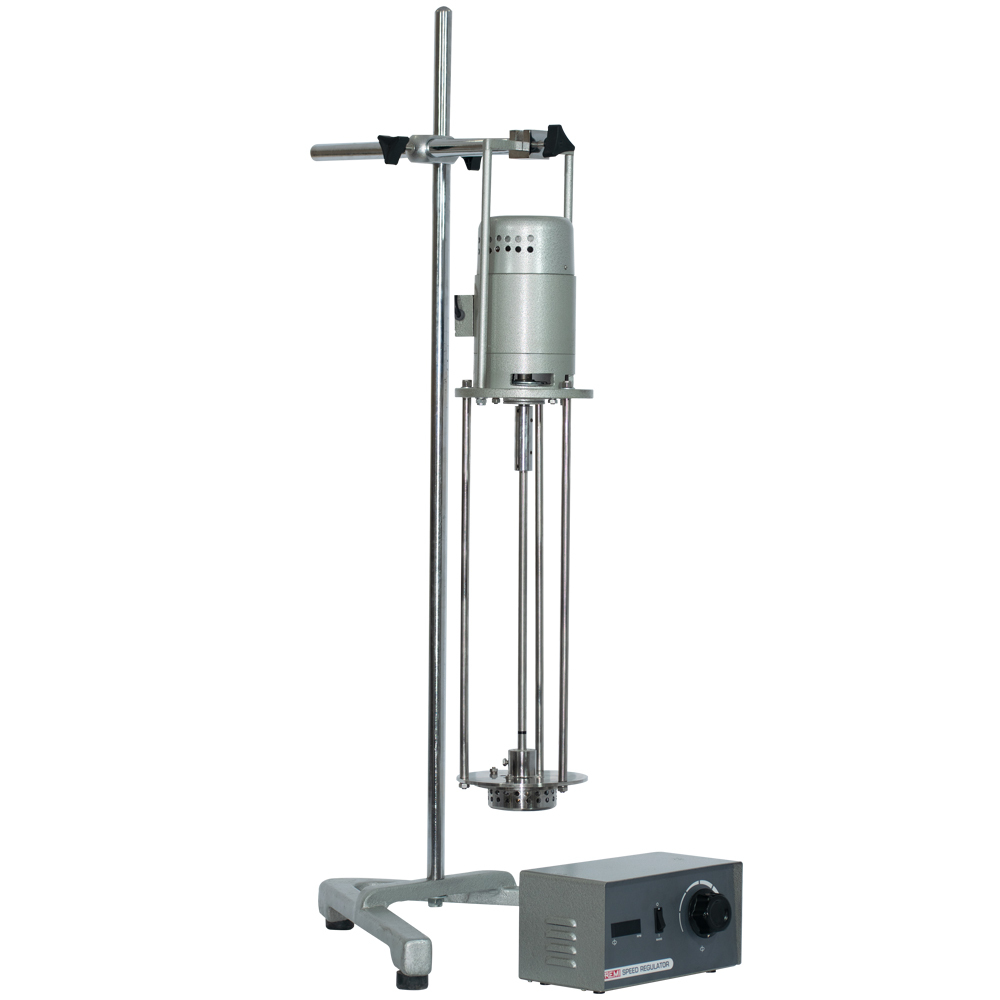
Lab Stirrers and Impellers
Price 10000 INR/ Unit
MOQ : 1 Unit
Lab Stirrers and Impellers Specification
- Temperature Resistance
- Up to 250C
- Power Supply
- AC Mains
- Speed Range
- 100 2000 RPM
- Display Type
- LED/LCD
- Heating Capacity
- Optional (For models with heating, up to 500 W)
- Glass Type
- Borosilicate (for Glass Parts, if applicable)
- Features
- Corrosion resistance, easy maintenance, adjustable speed
- Control Type
- Digital/Analog Control
- Shape
- Cylindrical/Rectangular (as per model)
- Accuracy
- 5 RPM
- Type
- Lab Stirrers and Impellers
- Dimension (L*W*H)
- 4-5 ft Foot (ft)
- Equipment Materials
- Stainless Steel (SS)
- Color
- Silver
- Power
- Electric
- Voltage
- 220 V
- Material
- SS
- Application
- Mixing, Stirring, Homogenization in Laboratory Settings
- Warranty
- Yes
- Capacity (Ltr)
- 1-20 Litres
- Impeller Type
- Propeller/Paddle/Turbine
- Stirring Shaft Material
- Stainless Steel
- Equipment Type
- Laboratory
- Weight
- 8-18 kg
- Ambient Temperature
- 10C to 40C
- Noise Level
- <65 dB
- Mounting Type
- Bench Top
- Speed Control
- Stepless/Variable
- Stirring Capacity
- Up to 20 Litres
- Safety Features
- Overload and Overheat protection
Lab Stirrers and Impellers Trade Information
- Minimum Order Quantity
- 1 Unit
- Payment Terms
- Telegraphic Transfer (T/T), Cheque, Cash Advance (CA)
- Supply Ability
- 10 Units Per Day
- Delivery Time
- 3 Week
- Main Export Market(s)
- Western Europe, Middle East, Africa, Central America, Asia
- Main Domestic Market
- All India
Lab Stirrers and Impellers About
REMI presents the next generation of laboratory stirrers for stirring / mixing etc of chemical. pharmaceutical, food and cosmetic products. The equipment basically consists of body. Chuck, stainless steel blade propeller and a U-type stand.
Laboratory StirrersFeatures
- High torque even at low speeds
- Monitoring of set & actual speed
- Wide range of impellers
- Advanced Stirrers with microprocessor technology
- Advanced Stirring speed control through VFD
- Constant speed even with change of load / Voltage
- Easy -to- read display of set & actual parameters
- Last parameter recall. Ideal for repetitive processes
- Accepts shafts up to 13mm
- Motor protection in case of continuous overload
- Stopper for protection of vessel & shaft
- Special base design for topple free operatio

Precision Control and Versatility
Lab stirrers and impellers offer stepless speed control within a broad 100 to 2000 RPM range, equipped with digital or analog displays for precise adjustment. Choose between cylindrical or rectangular forms to fit your laboratorys specific mixing needs, ensuring optimal homogenization without compromising safety or efficiency.
Superior Materials and Safety Features
Constructed from high-quality stainless steel andwith applicable modelsborosilicate glass components, these laboratory stirrers and impellers guarantee durability and chemical resistance. Each model is designed with noise levels below 65 dB and incorporates automatic overload and overheat protection for safe and quiet operation in laboratory environments.
FAQs of Lab Stirrers and Impellers:
Q: How do I operate and adjust the speed settings on the lab stirrers and impellers?
A: These lab stirrers and impellers are equipped with either stepless or variable speed controls, accessible via intuitive digital or analog controllers. Simply use the control panel to set your desired stirring speed (ranging from 100 to 2000 RPM) and monitor the performance on the LED or LCD display. Speed adjustments can be made during operation for precise mixing requirements.Q: What are the benefits of using a stainless steel stirring shaft and impeller?
A: Stainless steel ensures excellent corrosion resistance, durability, and compatibility with a wide range of chemicals. This guarantees long-term performance and easy maintenance, making the equipment ideal for routine laboratory operations involving various solutions.Q: When should I consider using models with optional heating capacity?
A: Models with optional heating (up to 500 W) are ideal when your laboratory protocols require simultaneous stirring and temperature controlsuch as dissolving, sample preparation, or chemical reactions. The temperature resistance of up to 250C ensures safe operation with heated processes.Q: Where can these lab stirrers and impellers be installed?
A: These units are designed for bench top installation, making them suitable for use in research labs, educational institutions, industrial quality control laboratories, and pharmaceutical settings. Their compact dimensions and manageable weight (8-18 kg) ensure easy integration onto most laboratory benches.Q: What safety features are integrated into these laboratory stirrers and impellers?
A: Every model is equipped with overload and overheat protection mechanisms, which automatically shut down the unit in case of abnormal load or temperature. This enhances user safety and protects both personnel and equipment during operation.Q: How is product maintenance carried out and what are the cleaning guidelines?
A: Maintenance is straightforward due to the stainless steel construction, which allows for easy cleaning and resistance to corrosion. Regularly disconnect the device, wipe all accessible surfaces with appropriate solvents or detergents, and inspect for residue or buildup on the stirring components for optimal operation.Q: What types of laboratory processes can this equipment support?
A: These lab stirrers and impellers are designed for diverse applications including mixing, stirring, and homogenizing both viscous and low-viscosity solutions, making them suitable for standard laboratory protocols, chemical synthesis, sample preparation, or quality control procedures.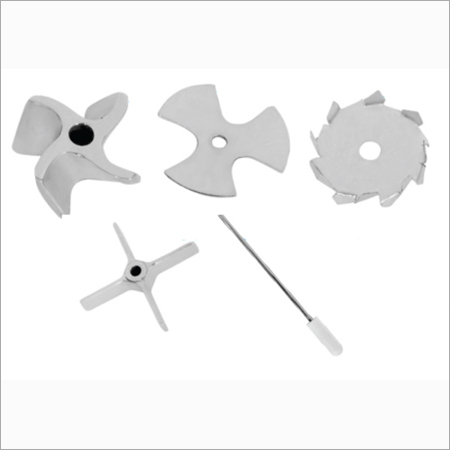
Tell us about your requirement

Price:
Quantity
Select Unit
- 50
- 100
- 200
- 250
- 500
- 1000+
Additional detail
Mobile number
Email

More Products in Laboratory Stirrers Category
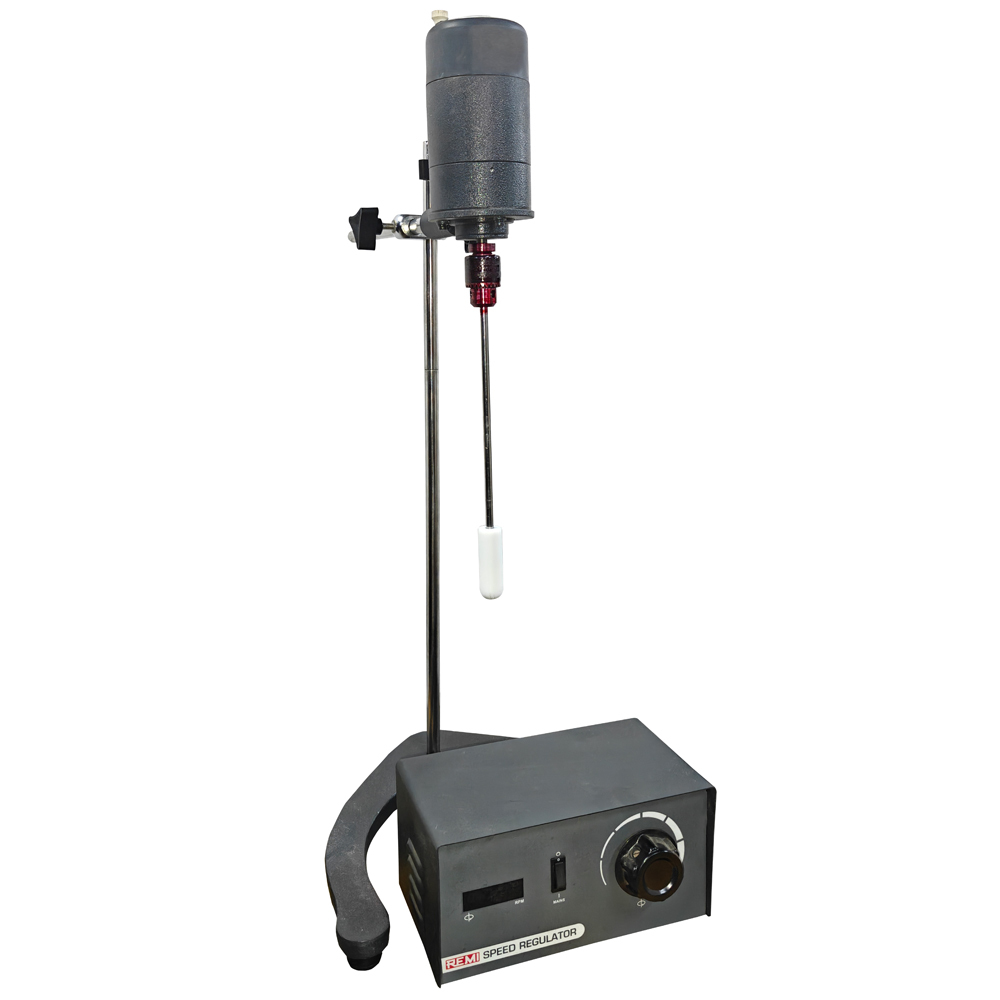
RQT-127A-D Laboratory Stirrer
Price 25960 INR / Unit
Minimum Order Quantity : 1 Unit
Warranty : 1 Year
Usage : Laboratory
Color : Grey
Power Supply : 220240V AC 50 Hz
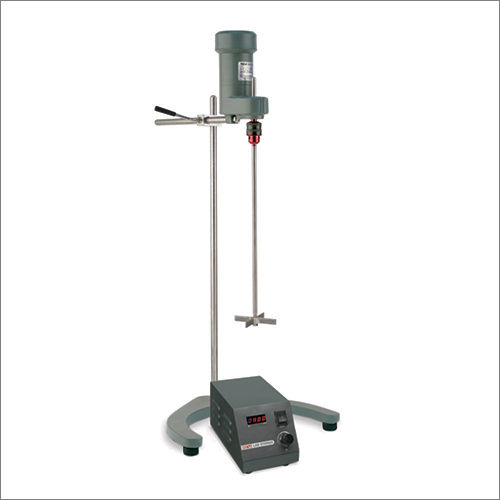
RQG-129/D Laboratory Stirrers
Price 29500 INR / Unit
Minimum Order Quantity : 1 Unit
Warranty : 1 Year
Usage : Laboratory
Color : Grey
Power Supply : Electric
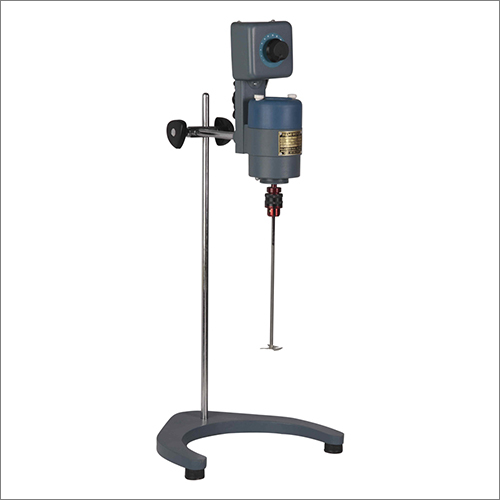
RQM-122/R Laboratory Stirrers
Price 11564 INR / Unit
Minimum Order Quantity : 1 Unit
Warranty : 1 Year
Usage : Laboratory
Power Supply : Electric
RQT-130 B/D Laboratory Stirrers
Price 49560 INR / Unit
Minimum Order Quantity : 1 Unit
Warranty : 1 Year
Usage : Laboratory
Color : Grey
Power Supply : Electric

Contact Details
- Remi House, 3rd Floor, 11, Cama Industrial Estate, Walbhat Road, Goregaon (East),Mumbai - 400063, Maharashtra, India
- Phone : 08045478084
- mktg@remilabworld.com
- Direct No. :+919372773715
REMI ELEKTROTECHNIK LIMITED
GST : 27AAACR2578P1ZR
GST : 27AAACR2578P1ZR

|


REMI ELEKTROTECHNIK LIMITED
All Rights Reserved.(Terms of Use)
Developed and Managed by Infocom Network Private Limited.
Developed and Managed by Infocom Network Private Limited.

